Instant Grits Exist. Stone-Ground Grits Are a Different Food.
The grits conversation usually gets framed as a quality argument — stone-ground are better, instant are worse — when the more accurate framing is that they are different products that happen to share a name. A stone-ground grit is a minimally processed dried corn kernel that retains its germ, its pericarp, and the fat and flavor compounds that live in those parts of the grain. An instant grit is a pre-cooked, dehydrated starch that dissolves in hot water. One takes forty-five minutes to cook correctly. The other takes five. The difference in cook time is not a convenience trade-off. It is a symptom of how much of the grain has been removed in processing, and with it, how much of the flavor.
What Grits Actually Are
Grits are dried corn that has been ground to a coarse meal. The most traditional form is ground from hominy — dried corn treated with an alkaline solution through a process called nixtamalization, which loosens the hull, increases nutrient availability, and changes the flavor in a specific way. Hominy grits have a slightly earthy, mineral quality. Straight corn grits taste more immediately of sweet corn.
The grain has three parts that matter: the germ, which contains fat and flavor compounds; the endosperm, which is mostly starch; and the pericarp, which is the outer layer carrying additional flavor and some fiber. A stone-ground grit retains all three in varying proportions. The fat in the germ is what makes stone-ground grits taste rich without adding butter, what makes them stick together as they cool, and what makes them go rancid faster than shelf-stable alternatives — which is why stone-ground grits belong in the refrigerator or freezer, not a pantry.
What Degermination Does to a Grit
The commercial milling process for quick-cook and instant grits removes the germ almost entirely. This is done for shelf stability — the fat in the germ is what goes rancid, so removing it produces a product that can sit on a grocery shelf for two years. The fat and the flavor go with it.
What remains after degermination is primarily endosperm: starch, some protein, not much else. The resulting grit is nutritionally diminished and flavorless compared to the whole grain. Without the germ fat to emulsify with water and butter, degerminated grits do not develop the same creamy, self-binding texture that stone-ground grits produce. They can be made palatable with enough butter and cream, but they are responding to added fat rather than contributing their own.
Instant grits take this further: pre-cooked and dehydrated, the starch granules have already gelatinized and need only hot water to rehydrate. Five minutes is accurate. The texture that results is closer to cream of wheat than to anything a Lowcountry cook would recognize as grits.
The Corn Variety Matters Too
Most commercial grits, including many stone-ground options, are made from commodity white or yellow dent corn — the same corn grown at scale for animal feed and ethanol. It is a high-yield variety selected for starch production, not flavor.
The heirloom corn varieties that Southern mills have revived — Jimmy Red corn, Bloody Butcher, Sea Island White flint corn, and others — produce grits with a flavor complexity that commodity corn cannot replicate. The difference is meaningful in the same way that an heirloom tomato in August is a different food from a greenhouse tomato in February.
Anson Mills in Columbia, South Carolina is the operation most responsible for the heirloom grain revival in the South. Glenn Roberts founded it in 1998 specifically to source, grow, and mill the antebellum grain varieties that industrial agriculture had nearly eliminated. Their stone-ground grits — milled from Sea Island White flint corn and other heritage varieties — are the benchmark against which every other artisan grit is measured. Shipped cold in insulated packaging, stored frozen, shelf life measured in weeks rather than years. That perishability is a signal. Flavor and shelf stability are inversely related in a whole-grain product.
The heirloom varieties have their own histories. Jimmy Red corn was originally a moonshiner’s corn from South Carolina, grown for its high sugar content and nearly extinct before seed savers intervened. Bloody Butcher is an 1840s Virginia heirloom with deep red kernels and a pronounced nutty flavor. Sea Island White flint — grown in coastal South Carolina since before European contact — produces a particularly creamy texture due to its specific starch composition.
Other operations worth knowing: Marsh Hen Mill on Edisto Island, South Carolina — formerly known as Geechie Boy Mill — mills from locally grown corn with a specific Sea Island character. Logan Turnpike Mill in Blairsville, Georgia, grinding corn since 1927, produces stone-ground grits with an Appalachian profile. McEwen and Sons in Wilsonville, Alabama is one of the few remaining traditional mills in the Deep South — historically water-powered, though whether that remains exclusively the case in 2026 is worth confirming.
How to Cook Stone-Ground Grits Correctly
The single most important variable is water ratio, and the ratio given on most packages is insufficient for the best result. Four parts liquid to one part stone-ground grits is the standard; four and a half or five to one produces a more fluid, creamy result correct for the Lowcountry shrimp and grits context. The grits thicken as they cool, so cooking them slightly looser than seems right produces the correct texture when served.
The liquid question is secondary but important. Water produces a cleaner, more corn-forward result. Whole milk or a combination of water and cream produces a richer result. Stock — chicken or shrimp — produces grits with a savory depth that makes them a more integrated base for shellfish or braised proteins. All are correct depending on context.
Stone-ground grits cook slowly: thirty to forty-five minutes over low heat. The starch granules in an unprocessed grain need sustained heat and moisture to hydrate and release their starch. The technique has two phases: constant whisking for the first ten minutes after the grits go into the pot, to prevent clumping as the starch begins to gelatinize, then regular stirring every few minutes for the remainder. Turning up the heat at any point produces scorching and uneven cooking.
Fat goes in at the end. Butter or cream stirred in during the final minutes emulsifies with the rendered germ fat already present in the grits. Salt is added throughout — heavily, the way pasta water should be salted — not just at the end.
White Grits vs. Yellow Grits
White and yellow grits are made from white and yellow corn respectively. The flavor difference is real but subtle — yellow grits have a slightly more assertive corn flavor and a faint sweetness; white grits are milder and more neutral. Neither is superior.
In the Lowcountry, white grits are the standard. Sea Island White flint corn has been grown in coastal South Carolina since before European contact, and the mild, creamy character of white stone-ground grits is what makes them the correct base for shrimp and grits. In Appalachia and much of the mountain South, yellow grits are more common and the corn flavor is more prominent. This is a different regional expression of the same grain, not a lesser one.
How to Evaluate Grits at a Restaurant
A restaurant that serves good grits will know where they come from. If the server cannot answer “where are your grits from?” with a specific mill or producer, the kitchen is probably using a commodity product.
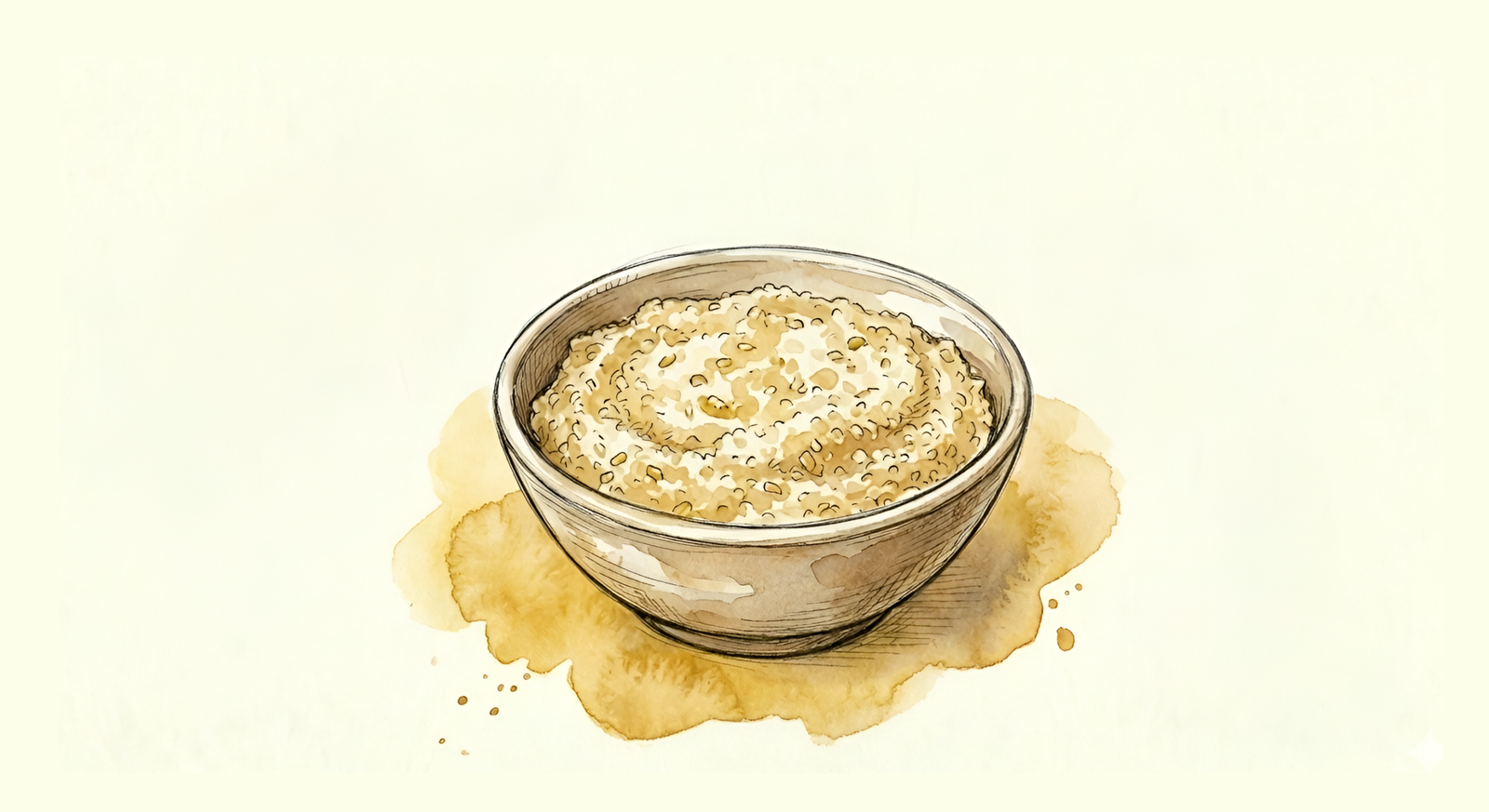
The texture tells you the processing level. Grits with visible grain variation — some pieces slightly larger, an uneven texture throughout — are stone-ground. Grits with a perfectly uniform, smooth texture have been processed to a consistent grind. Instant grits have no texture variation at all and a slightly gluey quality.
For shrimp and grits: the grits should be loose enough to accept the shrimp and sauce rather than sitting as a firm mound. A stiff, molded column of grits beneath shrimp and sauce is a kitchen that cooked them too thick or let them sit too long. The grits should pool slightly, drawing the sauce into them rather than sitting separately beneath it.
Where to Source Stone-Ground Grits
Anson Mills in Columbia, South Carolina is the benchmark for heirloom stone-ground grits. Order directly from their website. Ship cold and store frozen.
Marsh Hen Mill on Edisto Island, South Carolina mills from locally grown corn with a specific Sea Island character. Available directly and at specialty grocers in the Charleston area.
Logan Turnpike Mill in Blairsville, Georgia has operated since 1927. Their stone-ground grits carry an Appalachian profile and are among the most widely available artisan grits in the mountain South.
McEwen and Sons in Wilsonville, Alabama is one of the last water-powered mills in the Deep South. Their grits carry the character of the mill and the grain in a way that a larger electric-powered operation cannot replicate.
What to Skip
Instant grits have a use case — institutional food service, emergency cooking — and that use case does not include the table at a serious Southern restaurant or anyone’s home who has read this far.
Quick-cook grits are more problematic than instant because they are often sold as a premium alternative without being a fundamentally different product. Some quick-cook grits are simply ground into smaller particles to speed up hydration — a smaller grind absorbs water faster and cooks in fifteen to twenty minutes. But smaller particle size does not mean whole grain. Most quick-cook products have been partially or fully degerminated to achieve shelf stability. A faster cook time from a smaller grind still produces grit with the germ removed. Read the ingredient list: if it says “degerminated” corn, you know what you are working with regardless of what the front of the bag says.
How to Think About Grits: The Transferable Framework
Two questions answer most of what you need to know. First: are they stone-ground from whole grain? The best grits know where they came from. A label that names the mill is more meaningful than one that only says “stone-ground.” Second: what corn were they made from? Commodity dent corn produces a serviceable grit. Heirloom flint corn produces something more specific.
The cook time is the clearest available indicator. Five minutes means the grain has been processed to the point where the corn flavor has left the building. Forty-five minutes means something is still in there worth cooking. That patience is not inconvenience. It is what the grain requires to become what it was before someone decided that shelf stability was more important than flavor.