Gulf Shrimp vs. Atlantic Shrimp: How to Read the Count and Know What You’re Eating
The Number on the Menu Is Not a Size. It’s a Count. Here’s What That Changes.
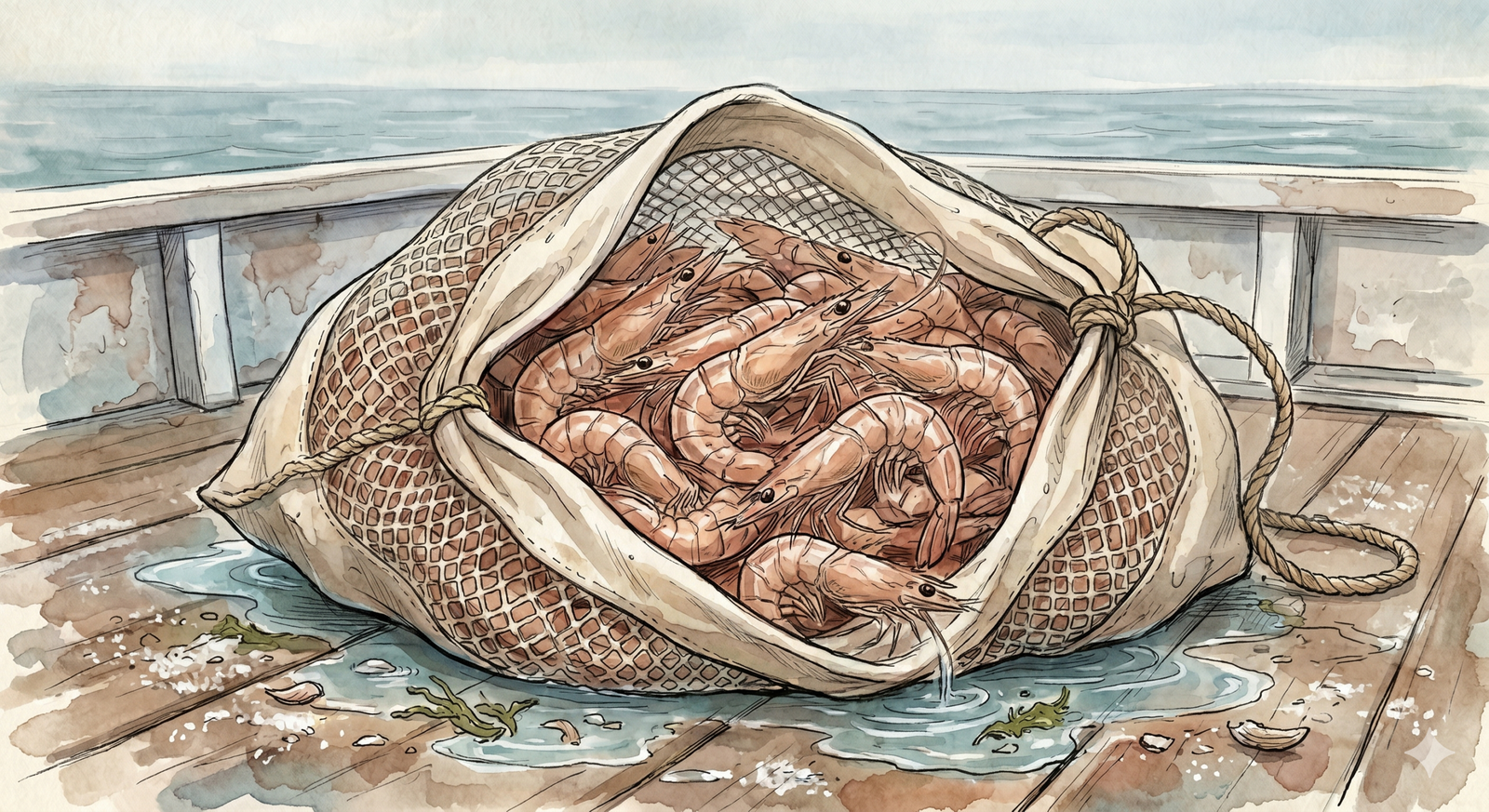
The number next to shrimp on a menu or at a seafood counter — 21/25, 16/20, U/15 — is not a size designation. It is a count: how many shrimp make one pound. A 21/25 count means between 21 and 25 shrimp per pound. A 16/20 means 16 to 20. A U/15 means under 15, which is a very large shrimp indeed. The number goes down as the shrimp gets bigger, which is counterintuitive enough that most people never learn it, order by adjective instead — large, jumbo, extra large — and end up with a dish that does not behave the way the recipe intended. Count is not a marketing label. It is a cooking variable. A shrimp and grits recipe built around 21/25 count shrimp produces a different dish entirely when made with 41/50s, because the smaller shrimp overcook before the sauce has time to develop. The count tells you what the shrimp can withstand and what it cannot.
How to Read the Count System
The standard count designations run from colossal down to salad shrimp, and the practical range for most Southern cooking sits between U/15 and 41/50.
U/15 and U/10 are colossal shrimp — under 15 or under 10 per pound. These are the shrimp built for New Orleans barbecue shrimp: a preparation invented at Pascal’s Manale that centers on butter, Worcestershire, and black pepper. Rosemary appears in the contemporary version popularized by chefs like Emeril Lagasse and Donald Link and is now standard enough to be part of how most people encounter the dish. Either way, the requirement is the same — a large, fat shrimp with the body to absorb butter and oven heat without vanishing into the sauce. At 41/50 count, the same preparation produces overcooked shrimp in a sauce that has nothing left to season.
16/20 and 21/25 are the range most Southern cooking uses as its standard. A 16/20 is the shrimp for a shrimp cocktail, where size is part of the presentation, and for a po’boy, where a larger shrimp maintains its texture inside the fried coating. A 21/25 is the ideal count for shrimp and grits — large enough to anchor the plate and hold its texture against a rich sauce, small enough to cook through evenly in the time the sauce needs to reduce.
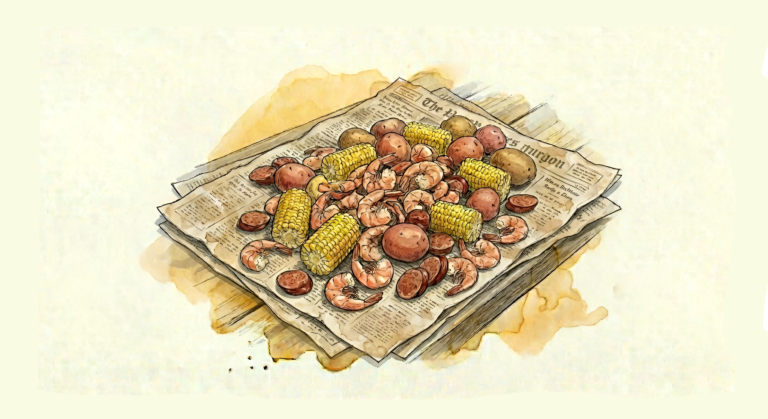
26/30 and 31/40 are medium-large to large, the range that works in a Lowcountry boil. Shell-on shrimp in a boil need enough body to survive two to three minutes in heavily seasoned water without overcooking, and a 26/30 count handles that requirement where a smaller shrimp would not.
41/50 and above are medium and small — the counts for stir-fries, pasta, tacos, and applications where the shrimp is one element among several rather than the centerpiece. They are also the counts most commonly used in fried shrimp applications at high-volume restaurants, where smaller shrimp fry faster and more evenly.
The U prefix matters: U/15 is not the same as 15/20. U means under. A U/15 shrimp is larger than a 16/20. If you see U on a menu or package and are not sure what it means, it means the shrimp is large enough that fewer than that number fit in a pound.
What the Water Does: Gulf vs. Atlantic
The count system tells you size. The water tells you flavor, and the two are connected.
Gulf shrimp grow in the warm, lower-salinity water of the Gulf of Mexico, fed by the nutrient-rich runoff of major river systems — the Mississippi, the Atchafalaya, the rivers of the Texas coast. That warm, food-rich environment accelerates growth. Gulf shrimp get large. They accumulate fat. The flavor is sweet and mild, with a richness that comes from fat content rather than salinity. A Gulf white shrimp at peak season has a sweetness and a body that Atlantic shrimp cannot replicate, and the cooking traditions built around it reflect that character. New Orleans barbecue shrimp requires a large, fat shrimp. The butter sauce is built around a shrimp that can hold its own against it.
Atlantic and Carolina shrimp grow in the colder, higher-salinity estuaries of the Carolinas, Georgia, and Virginia. Cooler water slows growth. The shrimp stay smaller and develop a firmer texture and a more pronounced brininess from the saltier water. That brininess is not a deficiency. It is the character the Lowcountry built its cooking around. Shrimp and grits in Charleston is built around Carolina shrimp specifically because the brine of those estuaries cuts through the richness of stone-ground grits and country ham in a way that a milder Gulf shrimp would not. The dish tastes like the coast it comes from.
The practical implication: when you order shrimp and grits in Charleston and shrimp and grits in New Orleans, you should expect two different dishes even if the preparation looks similar on paper. One is built around briny, firm Carolina whites. The other is built around sweet, large Gulf whites. Both are correct for where they are.
The Three Gulf Species and When They Run
Gulf shrimp is not a single product. Three species dominate the Gulf harvest, and they run on different schedules with different flavor profiles.
Brown shrimp are the shrimp running right now in June. Season opens in late May across the Gulf and runs through August. Browns are smaller than whites at the same count, with a richer, more assertive flavor — a mineral quality that comes from the Gulf floor where brown shrimp feed. That assertiveness is an asset in the right preparation and a liability in the wrong one. Bold spices, citrus, and acid-forward sauces like remoulade work with it. A delicate butter preparation that would flatter an October white will let the brown shrimp’s character run unchecked. They are excellent fried, excellent in a boil where the seasoning meets them at full volume, and excellent in any preparation that gives them something to push against.
White shrimp are the shrimp most people picture when they imagine the ideal Gulf product. Season runs from late summer through November, peaking in September and October when the water begins to cool and the shrimp are at their largest and sweetest. Gulf whites at 21/25 count in October are the version of the dish worth planning around. The same logic applies on the Atlantic side: fall whites from the South Carolina ACE Basin in October are not the same product as June browns, and knowing which is on the plate tells you what to expect.
Pink shrimp are primarily a Florida Gulf species, concentrated in the shallow grass flats of southwest Florida and most prized from the waters around Key West. Key West pink shrimp run from late fall through spring and are among the most delicate shrimp in American waters. They are smaller than whites at the same count, with a color that is genuinely pinkish before cooking and a sweetness that makes them poorly suited to heavy preparations. A Key West pink shrimp sautéed simply in butter and garlic is a different experience from a Gulf white in barbecue sauce, and treating them interchangeably wastes what makes them specific.
What Count to Use for Specific Dishes
The count decision is a cooking decision before it is a shopping decision.
For shrimp and grits, 21/25 or 26/30 is the range. Large enough to anchor the plate, small enough to cook through before the sauce breaks. Anything above 31/40 produces shrimp that overcook in the time the sauce needs, and anything below 16/20 is more shrimp than the dish requires.
For a po’boy, 36/40 to 41/50 works well for fried applications because the smaller shrimp fry evenly and fit the proportion of the bread without overwhelming it. A 16/20 shrimp on a po’boy is technically impressive but structurally awkward.
For New Orleans barbecue shrimp, U/15 or 16/20. The preparation requires a large shrimp that can absorb butter and hold its texture through oven heat. This is not a dish for medium shrimp.
For a Lowcountry boil, 21/25 or 26/30, shell-on. Large enough to survive the boil, small enough that the seasoning penetrates the shell before the shrimp overcooks. Shell-on is not optional regardless of count — the shell is what protects the meat during the two-to-three-minute cook and concentrates the flavor inside.
For shrimp cocktail, 16/20 or 21/25. Presentation matters at this count — you are eating the shrimp cold and unadorned, so size and sweetness are the whole argument.
What to Skip
Any shrimp labeled “Gulf shrimp” without “Product of USA” on the package has not confirmed its origin. Gulf shrimp is a marketing term, not a protected designation. Shrimp processed at a Gulf Coast facility after being imported can be associated with Gulf Coast branding in ways that do not hold up to scrutiny. Product of USA is the language that matters at retail. The exemption worth knowing: COOL labeling requirements apply to large retailers but not to restaurant menus or processed and breaded shrimp products. A menu that says Gulf shrimp has made a claim the kitchen is not required to prove. At a restaurant, the question to ask is where the shrimp came from and whether it is wild-caught domestic. A kitchen that knows its supplier will answer immediately.
Peeled and deveined shrimp for a Lowcountry boil is a mistake regardless of count or origin. The shell is doing structural and flavor work during the cook. A peeled shrimp in a boil produces rubbery, diluted-tasting results — the same shrimp, the wrong preparation.
Head-on shrimp at a seafood counter is the clearest signal of genuine freshness. The heads deteriorate too quickly to survive international shipping and thaw cycles, so if the heads are on, the shrimp is almost certainly domestic and recently harvested. “Fresh never frozen” from a known domestic source is a different and more valuable product than counter shrimp that has been previously frozen and thawed for display, which is common and not a problem — but worth knowing.
How to Think About Shrimp: The Transferable Framework
Three questions before you order or buy. First: what is the count, and does it match the preparation? A shrimp and grits built on the wrong count is working against itself before anything else goes wrong. Second: which species and which season? Brown shrimp in June, white shrimp in October, pink shrimp in winter — each has a specific flavor profile suited to specific preparations. Third: Gulf or Atlantic? The water determines the flavor, and the flavor determines which dish the shrimp belongs in.
A Gulf white at 21/25 count in October and a Carolina white at 26/30 count in November are both at peak season. They are not the same shrimp. They are not built for the same dish. Knowing the difference does not make you a more difficult customer. It makes you the customer who gets the right shrimp.