Gulf Oysters and Eastern Oysters Are the Same Species. The Water Makes Them Different Foods.
A raw oyster from Apalachicola and a raw oyster from the Virginia coast are biologically the same animal: Crassostrea virginica, the Eastern oyster, the only species that matters for most of what gets eaten in the American South. What separates them is not genetics. It is water. The temperature, salinity, tidal flow, and food sources of the specific body of water where an oyster grows determine its flavor, its texture, its size, and its character as completely as any other force in food production. An oyster is its environment, and understanding the environment tells you what to expect before the shell is opened.
What Cold Water Does to an Oyster
Atlantic Coast oysters — grown from the Chesapeake south through the Carolinas — spend their lives in water that is cold for much of the year and high in salinity from consistent tidal exchange with the open ocean. Cold water slows an oyster’s metabolism. It grows more slowly, developing a firmer texture and a more concentrated mineral profile. The liquor inside the shell — the liquid that pools when it is opened — is clear, briny, and dense with the character of that specific water.
High salinity means pronounced brininess: the clean, oceanic punch that most people associate with a “good” raw oyster. But salinity varies even within the Atlantic South, and those variations produce meaningfully different oysters. A Chesapeake Bay oyster grows in brackish water where freshwater rivers dilute the tidal salt, producing an oyster that is milder and sweeter than its Virginia coastal counterpart. An oyster from the Virginia barrier islands, where tidal exchange is strong and salinity is high, will be sharply briny and mineral. Both are Atlantic oysters. They are not the same product.
What Warm Water Does to an Oyster
Gulf Coast oysters grow in water that is warmer year-round and lower in salinity than the Atlantic. Warmer water accelerates growth, which produces a larger oyster with a softer, more supple texture and a higher fat content from the abundant phytoplankton in Gulf waters. The flavor is milder, rounder, and less sharply briny than an Atlantic oyster. The liquor tends to be more opaque and creamy rather than clear.
These are not deficiencies. They are the product of a different environment optimizing for different qualities. A properly harvested Gulf oyster in season has a richness and a sweetness that a cold-water Atlantic oyster cannot replicate — a fullness in the meat that comes from fat content and growth rate rather than mineral concentration. When New Orleans menus offer chargrilled oysters, they are using Gulf oysters specifically because that fat content holds up to heat, butter, and garlic in a way that a leaner Atlantic oyster would not.
The comparison that clarifies it: a Gulf oyster is to an Eastern oyster roughly what a ribeye is to a filet. One is richer and more forgiving. One is leaner and more precise. Neither is better in the abstract. They are different eating experiences requiring different approaches.
How to Read an Oyster Before You Eat It
The shell tells you something before the knife goes in.
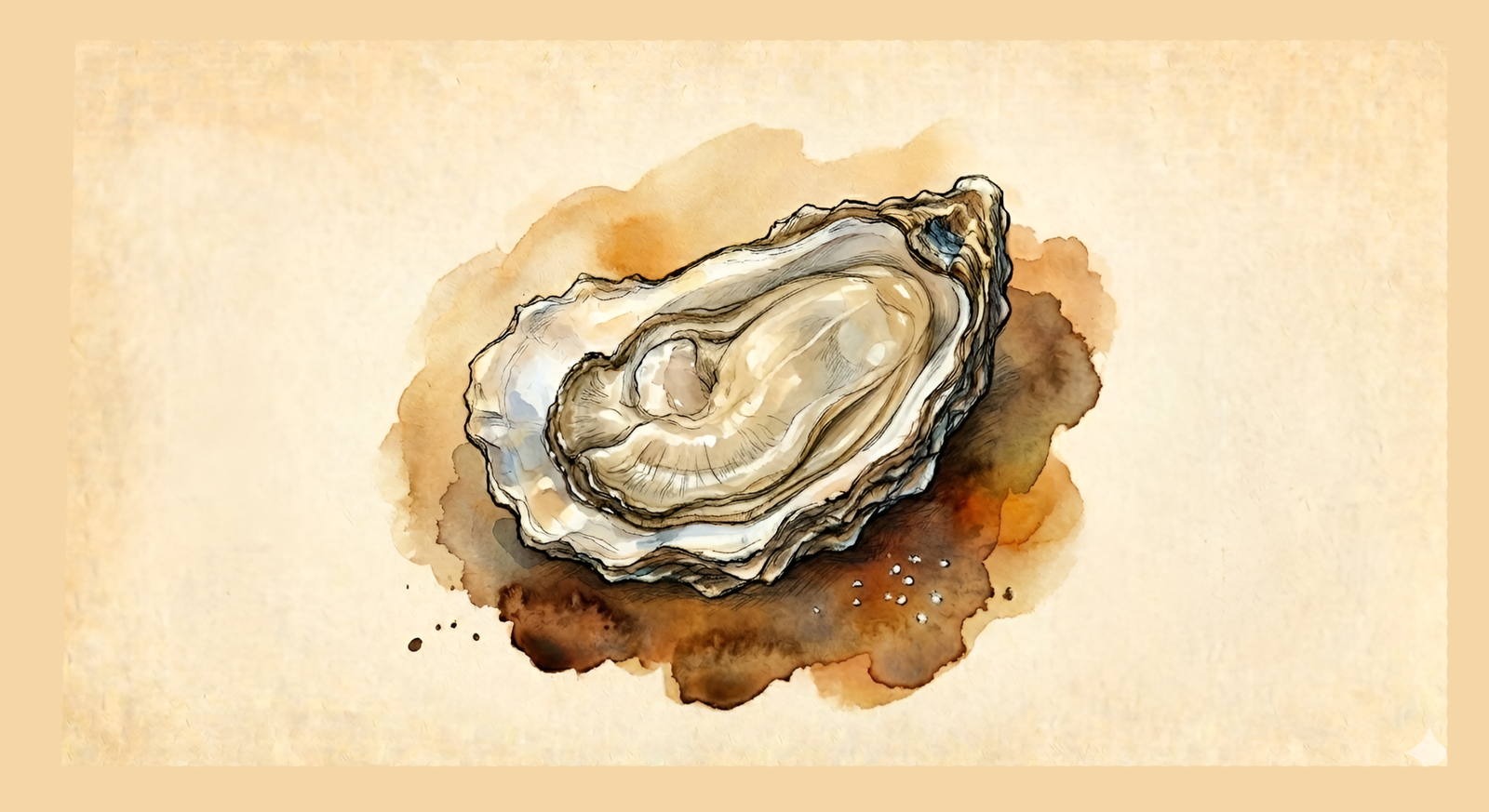
A deep, cupped shell generally indicates an oyster grown in moving water — tidal channels, river mouths — where current prevents the oyster from resting flat and encourages a deeper cup. More cup means more liquor. An oyster with a flat, thin shell grew in calmer water and will typically have less liquor and a drier texture.
Size indicates grow time in most cases. Gulf oysters grow faster in warmer water and are typically larger. Atlantic oysters grown in cold water take longer and are often smaller and denser. A very large Atlantic oyster has usually been in the water a long time, which can mean more complexity or, past a certain point, a coarser texture.
The liquor is the clearest signal once the shell is open. Clear liquor indicates a clean, high-salinity environment. Opaque or milky liquor indicates warmer water and higher fat content. Neither is a quality indicator on its own — both can be excellent — but each tells you what flavor profile to expect and how to approach the oyster.
The R Month Rule — and Why It Matters More for Gulf Oysters
The conventional rule is that oysters are best in months containing the letter R — September through April — and should be avoided in summer. The origin of the rule is real, though the application varies by region.
In cold Atlantic waters, the R month rule is primarily a quality guideline. Summer months warm the water and trigger spawning, during which oysters become thin, watery, and flavorless. The rule keeps you away from a substandard product more than a dangerous one.
In Gulf waters, the R month rule carries a more urgent rationale: Vibrio vulnificus, a naturally occurring bacteria that thrives in warm coastal water above 68 degrees Fahrenheit. Gulf water temperatures in summer routinely exceed that threshold, and Vibrio concentrations rise with them. For healthy adults, raw Gulf oysters in summer carry a low but real risk. For anyone with liver disease, diabetes, or a compromised immune system, the risk is significant. The Gulf oyster industry is regulated and tested, but the FDA advises against raw Gulf oysters in the warm months for vulnerable populations, and the advice is worth following.
The practical upshot: raw Gulf oysters are best October through March. Raw Eastern oysters are best September through April, with winter being the peak for most Atlantic Coast varieties. If you are eating raw oysters in June in New Orleans, they are almost certainly triploid farmed oysters — aquaculture-raised animals bred sterile so they never spawn and never go thin and watery in summer — or imported from colder water. High-end raw bars increasingly rely on triploids to serve oysters year-round with consistent quality. A raw bar that can tell you whether its summer oysters are triploid is a raw bar paying attention to what it serves.
How the South Eats Its Oysters: Three Distinct Traditions
The Gulf Coast, the Chesapeake, and the Lowcountry each developed a distinct relationship with the oyster, and understanding those traditions changes how you order.
The New Orleans half-shell tradition is raw Gulf oysters with Tabasco and a squeeze of lemon, eaten at an oyster bar counter. The Tabasco is correct here — its barrel-aged complexity and sharp acid cut through the fat of a Gulf oyster in a way that Crystal’s thinner vinegar profile cannot. This is the eating tradition that developed specifically around the Gulf oyster’s character.
The chargrilled oyster is a New Orleans innovation that uses the Gulf oyster’s fat content as an asset. Oysters go on a very hot grill in their shells, and a compound butter — typically garlic, butter, Parmesan, and herbs — is added as they cook and open. The fat in the Gulf oyster holds the butter and keeps the meat from drying out under the heat. Drago Cvitanovich invented the preparation at Drago’s Restaurant in New Orleans in 1993, and it has since spread to oyster bars across the Gulf Coast. The original is still the reference.
The Lowcountry oyster roast is a communal eating tradition specific to South Carolina and coastal Georgia, where wild-harvested cluster oysters — multiple oysters fused together on a single shell — are shoveled onto a metal sheet over a wood fire, covered with wet burlap, and steamed until they open. You stand around the table with a small knife, shucking as you go. The oysters are smaller and brinier than Gulf oysters, the liquor is concentrated from the steam, and the whole occasion is understood to be a seasonal event rather than a restaurant experience. Oyster roast season runs October through March.
The Apalachicola Story
Apalachicola, on the Florida Panhandle, produced what many considered the finest Gulf oysters in America for most of the twentieth century. The bay sits at the mouth of the Apalachicola River, fed by the Chattahoochee and Flint rivers from Georgia and Alabama. That freshwater input lowered the bay’s salinity to a level that produced oysters with a distinctive briny-sweet balance — neither fully brackish nor fully oceanic — that chefs and raw bar operators sought specifically.
A decades-long legal dispute over freshwater rights upstream, combined with overharvesting and Hurricane Michael in 2018, effectively destroyed the wild oyster fishery in Apalachicola Bay. The state of Florida closed the bay to commercial oystering in 2020. Aquaculture operations are attempting to rebuild what was lost, but the wild Apalachicola oyster that defined a generation of Gulf Coast raw bars no longer exists at commercial scale.
This matters beyond Apalachicola. It is the clearest illustration of the merroir argument: the oyster was not special because of its species. It was special because of its specific water. Change the water and the product disappears, regardless of the animal.
Where to Eat
New Orleans
Casamento’s on Magazine Street has been serving Gulf oysters on the half shell since 1919. The tile interior and counter service are unchanged. It closes in summer when Gulf oyster quality drops and reopens in the fall — an operating calendar that tells you everything about how seriously the kitchen takes the seasonal argument.
Felix’s Restaurant and Oyster Bar in the French Quarter is the more accessible option for visitors, with consistent quality and a raw bar that understands what it is serving.
The Lowcountry
The oyster roast tradition is best experienced outside a restaurant context — at a community roast, a farm, or a private gathering from October through February. Restaurants in Charleston and Beaufort serve oysters year-round, but the cluster oyster roast is not primarily a restaurant product. It is an outdoor eating occasion specific to the ACE Basin and Cape Romain areas.
Virginia
Rappahannock River Oysters operates both a production facility and a restaurant in Topping, Virginia, and has expanded into Richmond, Washington, and Charleston, SC. The Charleston location is worth noting: Rappahannock oysters grown in Virginia water, eaten in a city whose own oyster roast tradition runs deep. The oysters come from named growing areas on the Rappahannock, and eating there is one of the clearest illustrations of how water source produces a specific and unrepeatable flavor.
What to Skip
An oyster that does not smell clean when the shell opens should not be eaten. A live oyster smells like the sea. An off oyster smells like low tide or sulfur. This is not a nuanced judgment. Trust the smell.
Oysters served without a stated origin — listed only as “oysters” with no provenance — are almost always commodity product bought on price. They may be fine. They are not a reason to eat raw oysters, which is an experience worth having with an oyster that has a story attached to it.
Pre-shucked oysters in a jar are a cooking ingredient. Use them for frying, stewing, or stuffing. Do not eat them raw.
How to Think About Oysters: The Transferable Framework
The oyster is its water. That single principle explains every meaningful distinction in the category. Cold water produces a briny, mineral, firm oyster. Warm water produces a milder, richer, softer one. High salinity produces brine. Lower salinity produces sweetness. Long grow time produces complexity. Fast growth produces size and fat.
When you see an oyster on a menu, the first question is not “Gulf or Atlantic.” It is: where specifically, and what is the water doing there? A Virginia barrier island oyster and a Chesapeake Bay oyster are both Atlantic oysters and are nothing alike. A Louisiana bayou oyster and an Apalachicola oyster were both Gulf oysters and were nothing alike.
Named oysters with a specific growing location are always the correct order over generic “Gulf” or “Eastern” designations, because the name is the only guarantee that the merroir story is being told honestly. An oyster without a place name is an oyster without a provenance, and provenance is the whole argument.
Seasonal windows apply to wild-caught oysters. Farmed triploid oysters — bred sterile so they never spawn — are excellent year-round and increasingly common at quality raw bars.