Vidalia Onions: The Only American Onion With a Federal Appellation
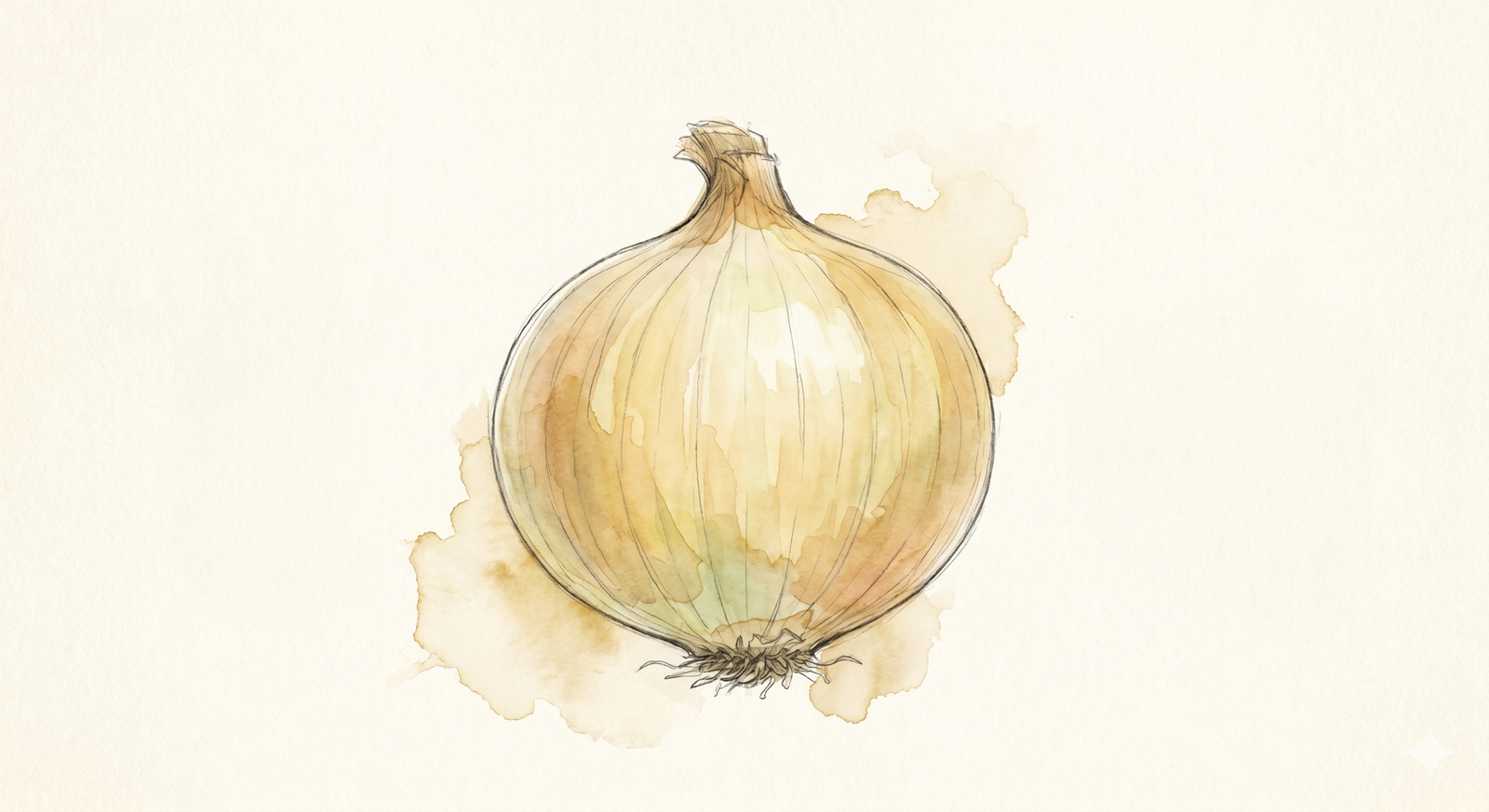
A Vidalia onion is not a variety of onion. It is a place. The Granex hybrid seed that produces a Vidalia grows in fields across the South, and in most of them it produces an onion with the sharpness and sulfur bite of any other yellow onion. Plant that same seed in the sandy loam of Toombs County, Georgia, and something different happens. The soil is low in sulfur, which means the onion cannot accumulate the sulfur compounds that produce pungency. The result is an onion so mild it can be eaten raw like an apple — a fact that local growers have demonstrated at trade shows for decades, biting into raw onions the way you’d bite into fruit. The sweetness is not in the seed. It is in the dirt, and the dirt exists in a federally defined boundary covering all or part of twenty counties in southeast Georgia and nowhere else on earth.
That makes the Vidalia onion the closest thing American agriculture has produced to a French appellation contrôlée. Champagne cannot be called Champagne unless it comes from the Champagne region of France, where the chalk subsoil and the specific mesoclimate of the Marne Valley produce a base wine that méthode champenoise cannot replicate anywhere else. A Vidalia cannot be called a Vidalia unless it comes from all or part of those twenty Georgia counties, where the federal marketing order passed in 1989 drew the production zone the same way French law drew Champagne. The legal mechanism is different. The underlying argument is identical: geography is the product, and the name protects the geography.
What the Federal Appellation Actually Covers
The Vidalia Onion Act of 1986, followed by the federal marketing order in 1989, established the production zone and gave the state of Georgia — and later the USDA — authority to regulate what can carry the Vidalia name. The twenty counties in the zone form a rough circle in southeast Georgia centered on Toombs County, with Vidalia itself as the commercial hub. The counties include Toombs, Tattnall, Candler, Evans, Bulloch, Emanuel, and several others radiating outward, all sharing the same low-sulfur sandy loam geology.
The official shipping season begins when announced by the Georgia Commissioner of Agriculture each year — typically mid-to-late April, set based on soil temperature and crop maturity rather than a fixed calendar date — and runs through the end of the summer storage period in August. Practical peak harvest ends in late June. Onions sold outside that window from that zone are not Vidalias under the legal definition regardless of origin. The federal protection means that a grower in the next county over — outside the twenty-county boundary — cannot call their sweet onion a Vidalia even if the soil and the seed are identical. The line is the line.
That specificity is what makes the appellation comparison to Champagne not merely rhetorical. Both systems protect a name that would otherwise be freely attached to imitations. Both systems exist because the original product is genuinely unrepeatable outside its geography. Both systems give consumers a reliable signal: the name means something specific, and that specificity can be verified.
Why the Soil Does What It Does
Onion pungency comes from sulfur compounds — specifically from pyruvic acid produced when onion cells are damaged and sulfur-containing precursors react with enzymes in the cell. The more sulfur available in the soil, the more the growing onion accumulates those precursors, and the sharper the resulting flavor. Tear into an onion grown in high-sulfur soil and the pyruvic acid production is immediate: the eyes water, the nose burns, and the raw bite is aggressive.
The sandy loam of southeast Georgia is naturally low in sulfur. The Granex seed planted in that soil produces an onion that cannot build the same sulfur compound reserves as the same seed grown elsewhere. Certified Vidalias must generally test below 5.0 micromoles of pyruvic acid per gram of fresh weight, with many extra-sweet batches hitting 3.0 or lower. Standard storage onions typically test between 5.0 and 9.0. That difference is what you taste when you cut a Vidalia without your eyes watering. A raw Vidalia is still an onion — eat one like an apple at a trade show demonstration and your dinner company will know what you had, just in a sweeter key than a chemical one.
The same mechanism explains why planting Granex seed in Virginia or Texas produces a pungent onion. The seed is the same. The soil is not. High-sulfur soil anywhere will overwhelm the variety’s natural tendency toward mildness. The Vidalia production zone is low-sulfur geology, and that geology is not reproducible by agricultural intervention. You cannot amend your way to Vidalia soil. The place is the product.
The Season and Why It Matters
Vidalia harvest runs from late April through late June in most years, with peak availability in May. The onions are harvested young — before the outer skin fully cures the way a storage onion does — which is part of what makes them sweet and part of what makes them perishable. A fresh Vidalia in May has high water content, thin skin, and a delicacy that a storage onion does not possess and does not need. It is built for immediate use or careful short-term storage, not for sitting in a pantry through October.
The high water content is the source of both the onion’s best quality and its most demanding storage requirement. The moisture is what produces the crispness of a raw Vidalia slice and the rapid caramelization in a hot pan. It is also what causes the onion to rot faster than a cured storage onion when held under the wrong conditions. Two Vidalias touching each other in a bag will bruise, and bruising accelerates spoilage. The traditional home storage solution — cutting the leg off a clean nylon stocking, dropping an onion in, tying a knot, dropping the next onion in, tying another knot — keeps each onion suspended and separated. Hung in a cool dry place, Vidalias stored this way keep for weeks rather than days.
The controlled atmosphere storage that extends commercial availability into fall uses cold temperatures and modified oxygen levels to slow the deterioration. It works. A September Vidalia in controlled storage is still recognizably sweeter than a standard yellow onion. It is also a diminished version of the May onion — the water content has shifted, the texture is less crisp, and the sweetness has softened into something more ordinary. The harvest window and the peak window are the same: May and June.
How the Vidalia Compares to Other Sweet Onions
The Vidalia is not the only place-specific sweet onion in American agriculture. Three others are worth knowing by name.
The Walla Walla Sweet Onion comes from the Walla Walla Valley of Washington and Oregon, where volcanic soil and specific temperature patterns produce a sweet onion with a slightly firmer texture than a Vidalia and a flavor that carries a faint mineral edge the Georgia onion does not have. Walla Wallas actually have their own federal marketing order — No. 956, established in 1995 — making Walla Walla legally similar to Vidalia in the protection it carries. The distinction is fame rather than legal standing: the Vidalia has become the nationally recognized name for American appellation onions while the Walla Walla remains less visible outside the Pacific Northwest. The season runs June through August, slightly later than Vidalia.
The Maui Sweet Onion grows in the volcanic red clay of the Kula region on the slopes of Haleakala. The high elevation and volcanic soil produce an onion with very low pyruvic acid levels and a sweetness that competes directly with the Vidalia. No federal appellation protection governs the name. Maui season runs late spring through summer and the onion rarely travels far from Hawaii in peak form.
The Texas 1015 SuperSweet takes its name from its optimal planting date — October 15 — and is grown in the High Plains and South Texas. It is the largest of the sweet onions and among the mildest, with substantial production and wide distribution. Walla Walla carries its own federal marketing order — No. 956, established in 1995. Maui and Texas 1015 do not. What distinguishes Vidalia from all of them is not primarily legal architecture — it is that the Vidalia name has become the nationally recognized standard for American appellation onions. When a bag says Vidalia and carries the USDA certification sticker, most consumers understand what that means. The name is the protection in practice, and Vidalia is the name that has traveled.
How to Cook a Vidalia and How Not To
A serious restaurant kitchen in southeast Georgia treats the Vidalia the way a Charleston kitchen treats the first soft-shell crabs of May — as a seasonal ingredient worth building a menu item around rather than a commodity available year-round. When a restaurant runs Vidalia onion rings as a seasonal special during the harvest window, that is the kitchen making the same argument this guide makes: the onion has a moment, and the moment is now.
Fried rings are where the Vidalia’s character is most legible in a cooked form. The high sugar content that makes the raw onion sweet is the same sugar that causes it to brown faster in a fryer than a storage onion would. A Vidalia ring in hot oil reaches golden brown and then dark brown more quickly than the same-size ring from a yellow storage onion, and the window between perfectly caramelized and burnt is narrower. The reward for getting it right is a ring with a sweetness in the crust that no storage onion can produce — the sugar has caramelized rather than simply cooked, and the result tastes of the onion rather than of the batter around it.
Grilled Vidalia slices — cut thick, brushed with olive oil, placed over direct heat — develop char and sweetness simultaneously in a way that turns the onion into something closer to a vegetable course than a condiment. The sugar feeds the Maillard reaction and the caramelization at the same time. Watch the heat. The Vidalia rewards attention and punishes neglect.
Where the Vidalia does not belong is in any long-cooked application that requires the structural integrity of a storage onion. French onion soup needs an onion that caramelizes slowly over forty-five minutes to an hour, releasing its sugars gradually. A Vidalia’s high water content causes it to go soft and then nearly dissolve in that time. The soup loses the textural presence the dish requires. This is not the Vidalia’s failure. It is a mismatch between the onion and the application.
For raw applications — sliced thin over a summer salad, cut thick on a sandwich, served alongside barbecue as a raw accompaniment — the Vidalia at peak season needs nothing but salt and possibly a sharp acid to balance the sweetness. The southeast Georgia sandwich tradition of thick-sliced Vidalia on white bread with Duke’s mayonnaise and salt is not a preparation that requires much explanation once you understand the onion. It is sweet enough that the mayonnaise functions as it would against a ripe tomato — fat and acid against something at its seasonal peak.
What to Skip
Any Vidalia in a grocery store between September and March is in controlled atmosphere storage and a diminished product. It is still a Vidalia by legal definition and still sweeter than a standard yellow onion. It is not the May onion. If the Vidalia’s specific sweetness and water content are the point — raw applications, fried rings, grilled slices — wait for May. If you need a sweet onion in November for a cooked application where the distinction is less critical, the storage Vidalia is serviceable. Know which situation you are in before you buy.
Bags labeled “sweet onions” with no further specification are not Vidalias. The Vidalia name with the USDA certification sticker is the indicator that the appellation is real. Absent that, sweet onion is a marketing term with no legal content.
Using a Vidalia as a substitute for a yellow storage onion in any recipe that requires sulfur bite — salsa, certain pickles, vinaigrettes where the onion’s sharpness is structural — produces a milder, sweeter result that may or may not be what the recipe intends. The substitution is not wrong if you understand what changes. It is wrong if you expect the Vidalia to behave like the onion it replaced.
How to Think About Vidalias: The Transferable Framework
The Vidalia appellation teaches a framework that applies to every place-specific food you encounter: the name protects the geography, and the geography is the product. When you see a protected designation — whether it is Vidalia, Champagne, Parmigiano-Reggiano, or Carolina Gold Rice — the protection exists because the product cannot be replicated outside its origin, and the name is the only reliable signal that the origin is genuine.
For the Vidalia specifically: buy in May and June when the harvest is fresh. Use it raw or in high-heat short applications where the sweetness has room to express itself. Store it carefully — individually separated, cool and dry — and use it within a few weeks. Skip the long braises. Skip the September grocery store bag if freshness is the point.
The onion that makes your eyes water when you cut it and the one you can bite into like an apple are the same seed. The difference is twenty counties of southeast Georgia soil, a federal marketing order, and a specific window in late spring when the harvest is fresh and the season is right.