Three Cocktails Invented in New Orleans. Each One Tells You Something Different About the City.
New Orleans has a stronger claim to American cocktail culture than any other city, and the claim rests on more than nostalgia. The Sazerac is the oldest known cocktail in the United States. The Ramos Gin Fizz is the most technically demanding drink in the American bar canon. The Vieux Carré is a master class in what happens when a great bartender decides to put everything the city has into a single glass. These three drinks were not invented in New Orleans by coincidence. They were produced by a specific combination of French and Creole culture, a pharmacy tradition that treated bitters as medicine, an immigrant labor force that brought botanicals from the Caribbean, and a city that has always understood that how you drink is part of who you are.
The Sazerac: The Oldest American Cocktail
The Sazerac begins with a Creole apothecary named Antoine Amédée Peychaud, who opened a pharmacy on Royal Street in the French Quarter around 1834. Peychaud made his own aromatic bitters, a formula based on a family recipe he brought from Saint-Domingue — present-day Haiti — and used them medicinally, mixed with cognac and sugar for patients who came to his shop. The preparation became popular as a drink in its own right, and the specific bitters Peychaud developed are what make the Sazerac distinct from every other old-fashioned-style cocktail in the world.
The original drink was made with cognac. In the 1870s, phylloxera — an aphid infestation that devastated European vineyards — destroyed the French cognac supply and made the spirit unavailable in New Orleans. American rye whiskey replaced it, and the character of the cocktail shifted: from the softer, fruit-forward profile of cognac to the spicier, more assertive character of rye. The phylloxera substitution was supposed to be temporary. It became permanent, and the rye version is now what most people understand a Sazerac to be.
The absinthe rinse is not optional and is not decorative. A small amount of absinthe — or Herbsaint, the New Orleans-produced anise spirit created in 1934 by J.M. Legendre specifically to fill the void left by the absinthe ban — coats the inside of the chilled glass before the rye, bitters, and sugar are added. Herbsaint is itself a near-anagram of absinthe, a detail that tells you exactly what Legendre was trying to replicate. The anise carries into the first sip and then recedes, leaving a faint herbal complexity on the finish. Remove the rinse and you have rye with bitters and sugar — a decent drink with no specific identity. The rinse is what makes it a Sazerac.
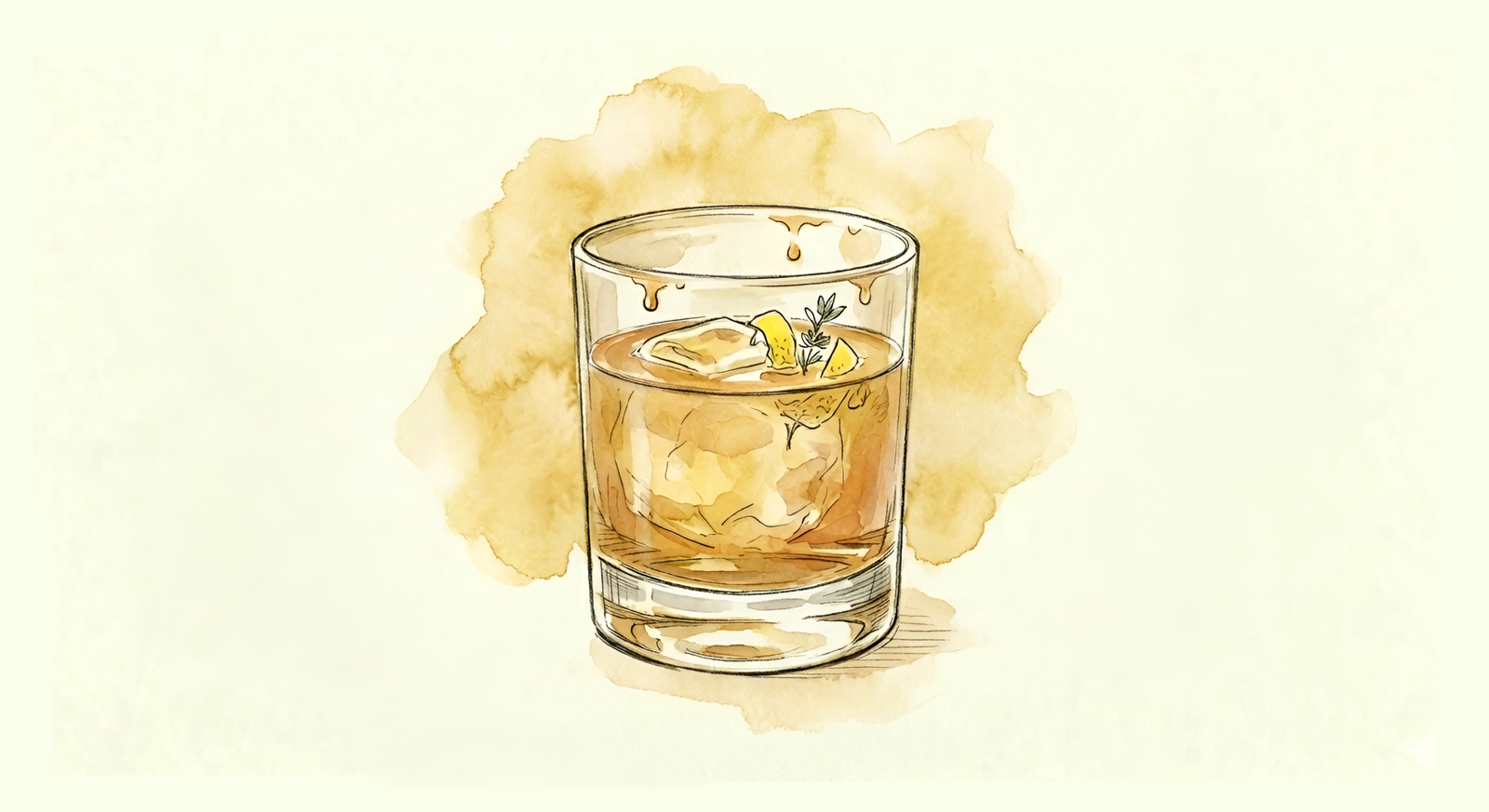
The lemon peel is expressed over the glass and then discarded — not dropped in. The oils coat the surface and the rim; the peel is set aside. Leaving it in introduces bitterness from the pith over time. Maraschino cherries do not belong in a Sazerac. This is not a preference. It is a category error.
The lemon peel is expressed over the glass, not dropped in. Maraschino cherries do not belong in a Sazerac. This is not a preference. It is a category error.
The Sazerac Bar in the Roosevelt Hotel is the most historically resonant location. Arnaud’s French 75 Bar on Bienville Street is the other essential option: a narrow, elegant room that takes cocktail history seriously and executes the Sazerac with the level of attention it deserves.
The Ramos Gin Fizz: The Most Labor-Intensive Drink in the American Bar Canon
Henry Ramos created this drink at his Imperial Cabinet saloon on Gravier Street in 1888. The historical standard was twelve minutes of continuous shaking. Modern craft bars achieve the same emulsification through a combination of dry shaking without ice followed by wet shaking totaling one to two minutes, sometimes with a mechanical shaker. The texture goal is unchanged; the labor has been redistributed. During Mardi Gras season at the height of the Imperial Cabinet’s popularity, Ramos reportedly employed a line of “shaker boys” who passed the cocktail shaker down in relay, one after another, to maintain the shaking without interruption. The drink was so popular and so demanding that keeping up with orders required an assembly line.
The texture is the point. The Ramos Gin Fizz contains gin, lemon juice, lime juice, simple syrup, heavy cream, egg white, orange flower water, and soda water. The shaking emulsifies the cream and egg white with the citrus and gin into a foam that is almost solid — white, dense, and tall in the glass, with the soda water added at the end to lift it above the rim. The result is something between a drink and a dessert: cold, frothy, slightly floral from the orange flower water, with the gin asserting itself underneath without dominating.
The orange flower water is what makes this drink specifically New Orleans. It arrived through the city’s connections with the Caribbean and North Africa, where orange blossom was common in pastry and drink culture. Remove it and the drink loses its specific character and becomes a sweet gin fizz like those made anywhere. The orange flower water is what makes it a Ramos.
Huey Long loved this drink sufficiently to fly bartender Sam Guarino from New Orleans to New York in 1935 to demonstrate the correct preparation at the New Yorker Hotel. The image of one of the most powerful political figures in the South dispatching a Ramos expert across state lines to fix what he regarded as an unacceptable cocktail situation is characteristically New Orleans.
The Ramos Gin Fizz is a morning drink. Its richness, sweetness, and dairy content make it closer to a breakfast preparation than an evening one. Ordering it at 10am after beignets is the correct instinct. Cure on Freret Street makes one of the most technically careful versions in the city. Avoid any bar that offers to shake it for less than ten minutes. The labor is not theater. It is what the drink requires.
The Vieux Carré: Everything the City Has in One Glass
The Vieux Carré was created by Walter Bergeron, head bartender at the Hotel Monteleone’s Carousel Bar, in 1938. The name means “Old Square” in French — the Creole name for the French Quarter. Bergeron’s stated intention was to create a drink that expressed the character of the neighborhood: French, Spanish, and American influences in a single glass.
The drink contains rye whiskey, cognac, sweet vermouth, Bénédictine, Peychaud’s bitters, and Angostura bitters. Every element pulls from a different tradition. The rye is the American South. The cognac is France. The sweet vermouth is Italy by way of the cocktail culture that spread through New Orleans bars in the late nineteenth century. The Bénédictine — a French herbal liqueur, its formula a blend of 27 herbs and spices developed by monks and kept secret since the nineteenth century — adds sweetness, depth, and botanical complexity. The Peychaud’s is the Creole thread that runs through New Orleans cocktail history, bringing brightness and a floral, anise-tinged lightness. The Angostura — Trinidad-made, British colonial in origin — provides the bass note that anchors those high-pitched floral qualities, adding the aromatic spice that keeps the drink from floating away into sweetness. A drink that contains ingredients from six different culinary traditions and still tastes coherent is either a lucky accident or the work of a very good bartender. The Vieux Carré is not a lucky accident.
The Carousel Bar itself has been rotating slowly — one full revolution every fifteen minutes — since 1949. It is a genuine New Orleans artifact: the kind of room that exists nowhere else. The bar is notoriously difficult to get a seat at during peak hours. It opens at 11am daily; on weekends a line forms by 10:45. Arrive ten minutes before the clock strikes eleven. Drink the Vieux Carré here. The drink is served on ice in an old-fashioned glass, stirred rather than shaken. The first sip reads rye-forward. The middle opens into the sweetness of the vermouth and cognac. The finish is the Bénédictine and the double-bitters complexity. It is a long drink in the sense that the experience extends beyond the first taste.
The Peychaud’s Thread
All three drinks connect back to Antoine Peychaud’s bitters. The Sazerac is impossible without them. The Vieux Carré specifically calls for both Peychaud’s and Angostura, and the contrast between them — Peychaud’s brightness versus Angostura’s spice and depth — is what makes the double-bitters construction work.
Peychaud’s bitters are still owned by the Sazerac Company, headquartered in New Orleans at the Sazerac House on Canal Street. The formula has not changed in any material way, though production has moved to Buffalo Trace Distillery in Frankfort, Kentucky. The New Orleans origin and New Orleans ownership are intact; the liquid in the bottle is now made in Kentucky. The bottle on a bar rail in New Orleans is a direct descendant of what Peychaud compounded in his pharmacy on Royal Street in the 1830s, and that thread has not been broken.
What to Skip
The hurricane is the most widely consumed cocktail in New Orleans and genuinely belongs to the city — Pat O’Brien’s created it in the 1940s from surplus rum, and it has been a Bourbon Street fixture for eighty years. It is not a subtle drink. What it is not is a window into the cocktail tradition this piece describes. The Sazerac, the Ramos, and the Vieux Carré are drinks built with technical intention. The hurricane is a crowd drink built for volume and occasion. Both things can be true: the hurricane is a legitimate piece of New Orleans drinking culture and not the deepest entry point into it. If you are starting here, start at Pat O’Brien’s where it belongs. If you want to understand what New Orleans actually invented, follow it with one of the three drinks above.
Any bar on Bourbon Street offering a Sazerac for under ten dollars is almost certainly cutting corners on either the rye quality or the preparation. The Sazerac is a three-ingredient drink where every element is visible. A poorly made Sazerac has nowhere to hide.
How to Think About New Orleans Cocktails: The Transferable Framework
Each of these drinks is an argument about what a cocktail should do. The Sazerac argues that a drink should be a precise, minimal expression of its base spirit. The Ramos Gin Fizz argues that a drink can be a labor of hospitality — that the effort in the making is part of what you are receiving. The Vieux Carré argues that complexity, when properly balanced, is a form of generosity: more to taste, more to return to, more in the glass than was apparent at first.
Understanding those three arguments makes every cocktail menu you encounter in New Orleans more legible. You are not just choosing a drink. You are choosing which argument you want to have tonight.